The bathroom renovation market is shifting — and the data from our trade orders tells a clear story.
Wet-room conversions are surging across the UK, driven by demand for accessible, low-maintenance spaces that don't compromise on aesthetics. Based on recent purchasing patterns from our contractor network, here are the five panel trends defining 2026:
1. Stone-Effect Finishes
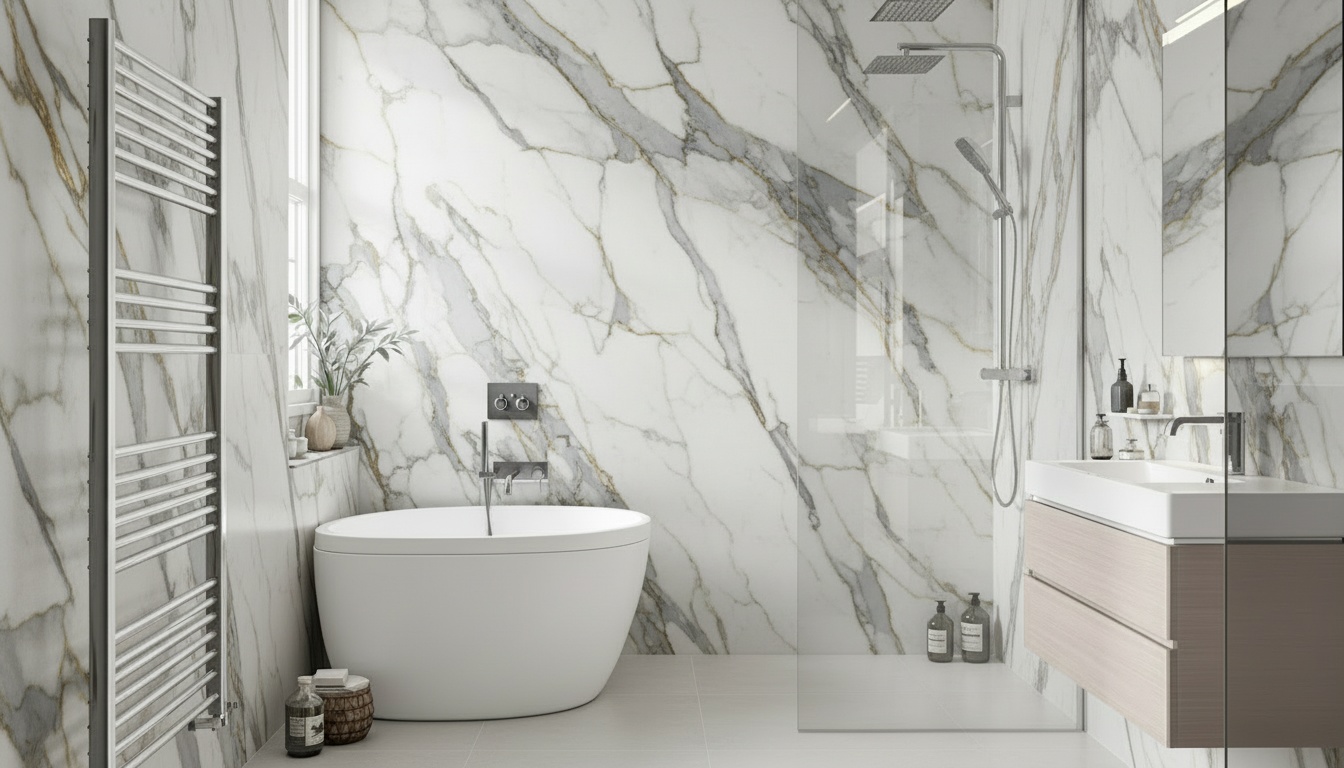
Authentic texture, reduced material costs. Stone-effect panels have moved from a niche option to a mainstream staple. Contractors are specifying them on everything from en-suites to full wet-room conversions — the visual payoff is high and the installation is significantly faster than real stone.
The key driver here is cost efficiency without aesthetic compromise. End clients get the premium look; contractors get a faster, cleaner install.
2. Large-Format Designs
Fewer seams, accelerated installation. Large-format panels — typically 1200mm wide and above — are becoming the default specification for professional installers. The maths is simple: fewer panels means fewer joins, which means faster fitting and a cleaner finished result.
From our order data, large-format panels now account for a growing share of trade orders, up significantly year-on-year.
3. Matte Surface Treatments
Fingerprint resistance, premium positioning. Gloss had its moment. Matte is where the market has landed. The practical benefits are real — matte surfaces show far fewer fingerprints and water marks — but the aesthetic shift is equally important. Matte reads as premium, and that matters to end clients.
For trade professionals, specifying matte finishes is increasingly a way to differentiate the quality of their work.
4. Neutral Palettes with Tonal Variation
Designer flexibility. Pure white and single-tone greys are giving way to more nuanced neutral palettes — warm greiges, cool slates, layered stone tones. The shift reflects a broader interior design trend toward spaces that feel considered rather than clinical.
The practical advantage for contractors: neutral tonal palettes are easier to match across fixtures, fittings, and flooring, reducing the risk of specification errors.
5. Waterproof Core Construction
Regulatory alignment, long-term durability. Building regulations and insurance requirements are tightening around moisture management in wet areas. Panels with fully waterproof cores — not just waterproof surfaces — are increasingly specified as standard, particularly in social housing and commercial projects.
The long-term durability argument is also compelling: waterproof core construction eliminates the risk of substrate damage from moisture ingress, reducing callbacks and warranty claims.
What This Means for Trade Professionals
For trade professionals, these trends translate to competitive advantage: faster project completion, reduced callbacks, and satisfied end clients.
The contractors performing best in the current market are those who've moved away from reactive specification — choosing panels based on what's available — toward proactive specification, choosing panels based on what delivers the best outcome for each project type.
At Splash Supply Co, we verify every order by phone before processing — ensuring specifications align with project requirements. No automated workflows. No miscommunication.
Interested in samples or pricing for your upcoming projects? Our team is available to discuss requirements directly.
Tags
